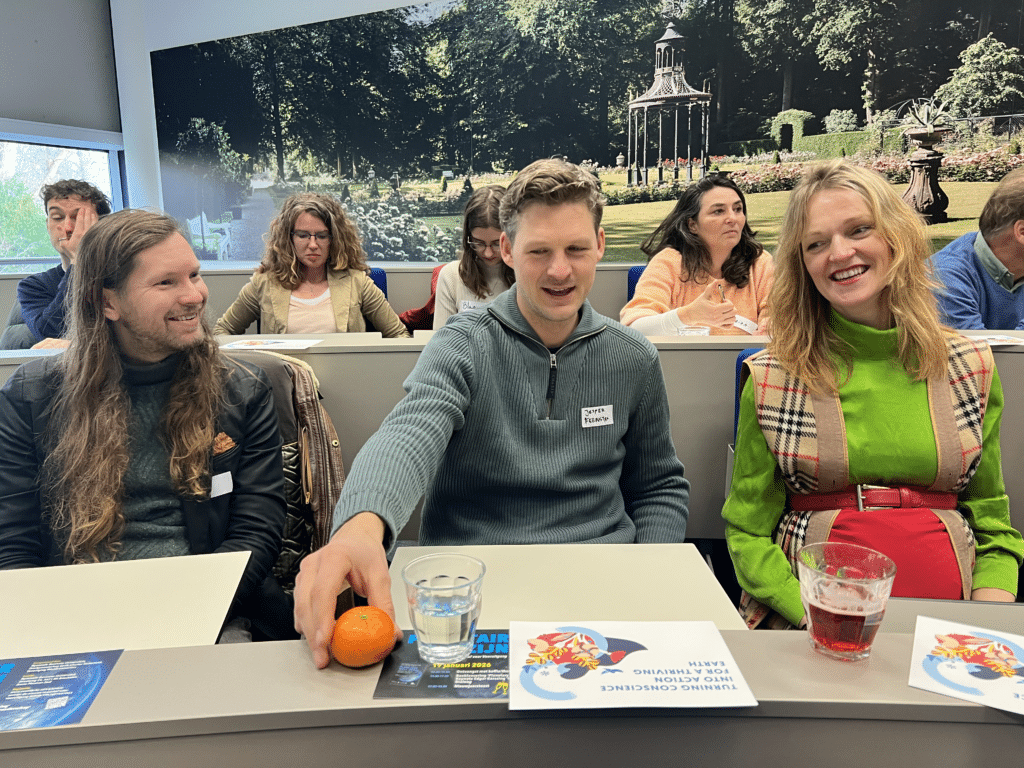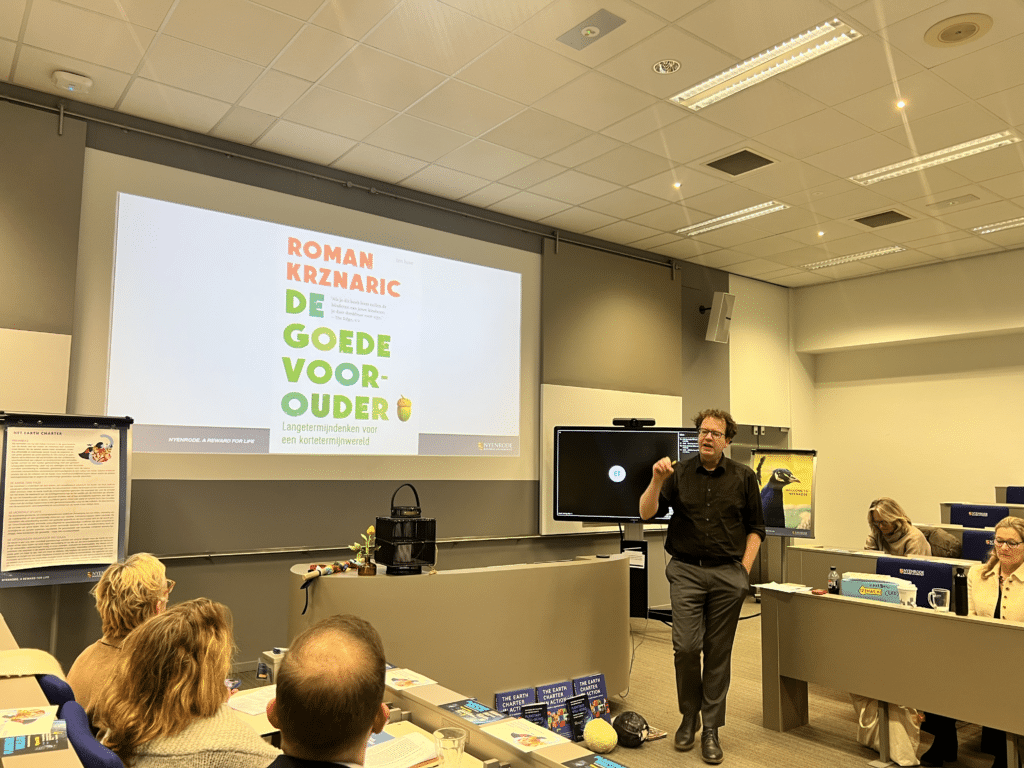


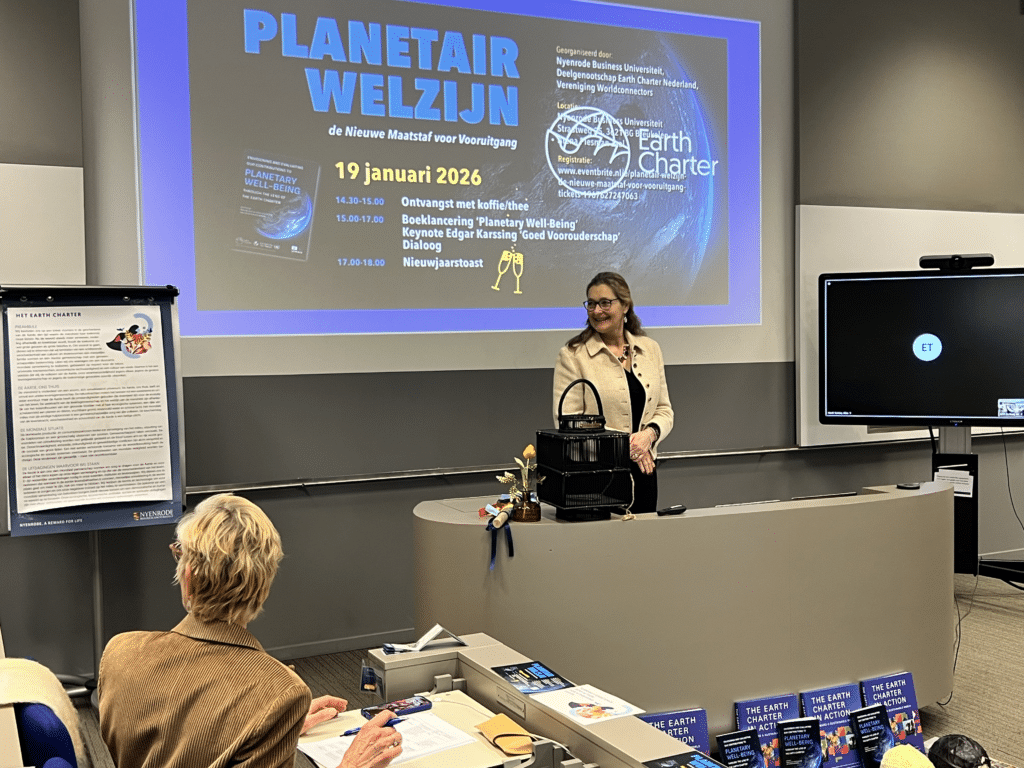
During the winter gathering of the Earth Charter Netherlands Community on 19 January 2026, participants came together at Nyenrode Business University in Breukelen to reflect on a shared question: how can we better understand and measure our contributions to the well-being of the Earth?
The meeting centred on the newly published book Envisioning and Evaluating Our Contributions to Planetary Well-Being through the Lens of the Earth Charter, which brings together twenty perspectives from authors around the world. The book explores the idea of Planetary Well-Being—the recognition that human prosperity and the health of the Earth are deeply interconnected. The gathering served as a special occasion to share the book with reflections on it and generate a dialogue on the themes that it brings us. The book includes two chapters contributed from Dutch people namely:
- Tineke Lambooy and Ebba Hooft Toomey titled “Establishing Rights of Nature as indicator of Planetary Well-Being.”
- Veronique Swinkels and Alide Roerink titled “The Old Economy Blinds The Netherlands for Planetary Well-Being: How to Integrate Our Planet and Future Generations into Dutch Democracy”
In a moment of reflection, a candle was lit with the intention that the storms of our time may also help clear the path ahead. Participants were invited to pause and reconnect with the living world, even imagining the quiet processes taking place within a tree during winter.
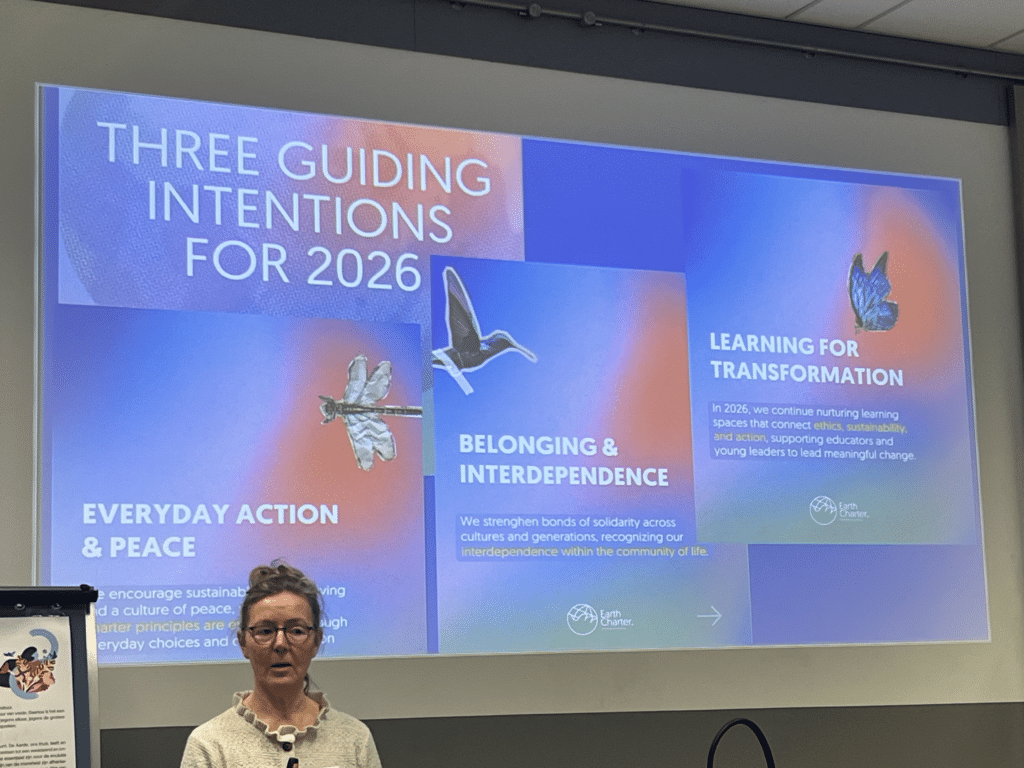
The discussions highlighted the growing awareness that traditional indicators of progress, such as economic growth alone, are no longer sufficient. What truly matters for the future of humanity and the planet includes clean air and water, healthy soils, thriving forests, responsible production, caring communities, and respect for the wider community of life.
The book contributes to an ongoing effort within Earth Charter International to explore the development of a Planetary Well-Being Index—a way to assess progress that reflects ecological integrity, social justice, and care for future generations.
Participants also reflected on the idea that being a good ancestor does not require heroic acts. Rather, it calls for consistent choices and collaboration that help redesign our systems in ways that support life on Earth.
The gathering concluded with renewed commitment to dialogue, cooperation, and action for planetary well-being.