

By Mariana Moraes Martins Morgenroth
The Call of Nature and the Awakening of Education
In a world that cries out for balance, where environmental challenges intensify and human disconnection from nature deepens, education remains the most powerful path toward transformation. My master’s thesis, defended in 2024 at the University Center of Lisbon, sought to answer a fundamental question: how can early childhood education serve as a link to reverse this disconnection, inspired by the call of the Earth Charter?
Entitled “What does nature teach? The curricular interweaving of the Earth Charter in an early childhood education school in the Brazilian context,” my research not only proposed but demonstrated in practice that a curriculum with nature as its central axis is both viable and urgently necessary. This article seeks to share the pillars of this journey, highlighting the Earth Charter as the fundamental compass that guided every step of this educational experience.
The phrase by David Sobel — “Give children the chance to love the Earth before asking them to save it” — synthesizes the essence of my work. It is about creating learning opportunities so that new generations can become agents of change, rescuing the premise that we are living beings who are part of a common home, which we must inhabit in a more ethical and respectful relationship, from early childhood onward.
The Urgency of Reconnection: Why Does Nature Need to Teach?
Our relationship with nature, once harmonious and subsistence-based, has been transformed into a dynamic of utilitarian domination, especially after the industrial and technological revolutions. This anthropocentric perspective has generated an unprecedented imbalance, manifested in climate crises and pandemics, whose impacts are increasingly evident.
As described by Morgenroth (2025), humanity has gradually distanced itself “from mother nature, which has come to be seen through a purely utilitarian lens focused on progress” (p. 11). This alienation generates what Richard Louv termed “Nature Deficit Disorder,” with profound implications for children’s cognitive, physical, emotional, and social development.
However, it is precisely in childhood that the greatest hope lies. Children, with their “wholeness and essence,” have the innate potential to restore this intrinsic and familiar relationship with nature (Morgenroth, 2025, p. 11). The central question of my research was therefore how to catalyze this reconnection through a curricular intervention project, using the Earth Charter as a guide. The answer, as I was able to observe, lies in the integration of values and ethical principles that recognize the interdependence of all life.
The Earth Charter: An Ethical Compass for Early Childhood Education
At the heart of my study, the Earth Charter emerges not merely as a document, but as a guiding instrument — a true ethical compass for building a more just, sustainable, and peaceful society. Its four pillars — Respect and Care for the Community of Life, Ecological Integrity, Social and Economic Justice, and Democracy, Nonviolence, and Peace — provide a solid framework for an education that transcends the mere transmission of content.
Morgenroth (2025) emphasizes that the Charter “extends an invitation to all inhabitants of Planet Earth to act and to have hope in the possibility of change and transformation,” clarifying the need to “promote a global ethic that recognizes the global interdependence of all living beings” (p. 20). This call resonates powerfully within the field of education, inviting educators to reassess their curricula and practices.
Beyond being a call to action, throughout the research it was possible to perceive how inspiring the Earth Charter is for the development of critical thinking, intercultural dialogue, active engagement in environmental issues, and the empowerment of students as agents of change. In this sense, the Charter becomes a guiding document that reinforces the need for a “collective commitment to educate planetary citizens” (Morgenroth, 2025, p. 23), making the interdependence between humans and the environment a central pillar in early childhood education.
“What Does Nature Teach?”: The Project in Action at Cresça e Apareça School
To materialize this vision, I applied the action-research methodology at Cresça e Apareça School, in Salvador, Bahia, where I serve as director. This methodological choice was crucial, allowing for a symbiotic interaction between daily professional practice and the production of scientific knowledge (Morgenroth, 2025, p. 36).
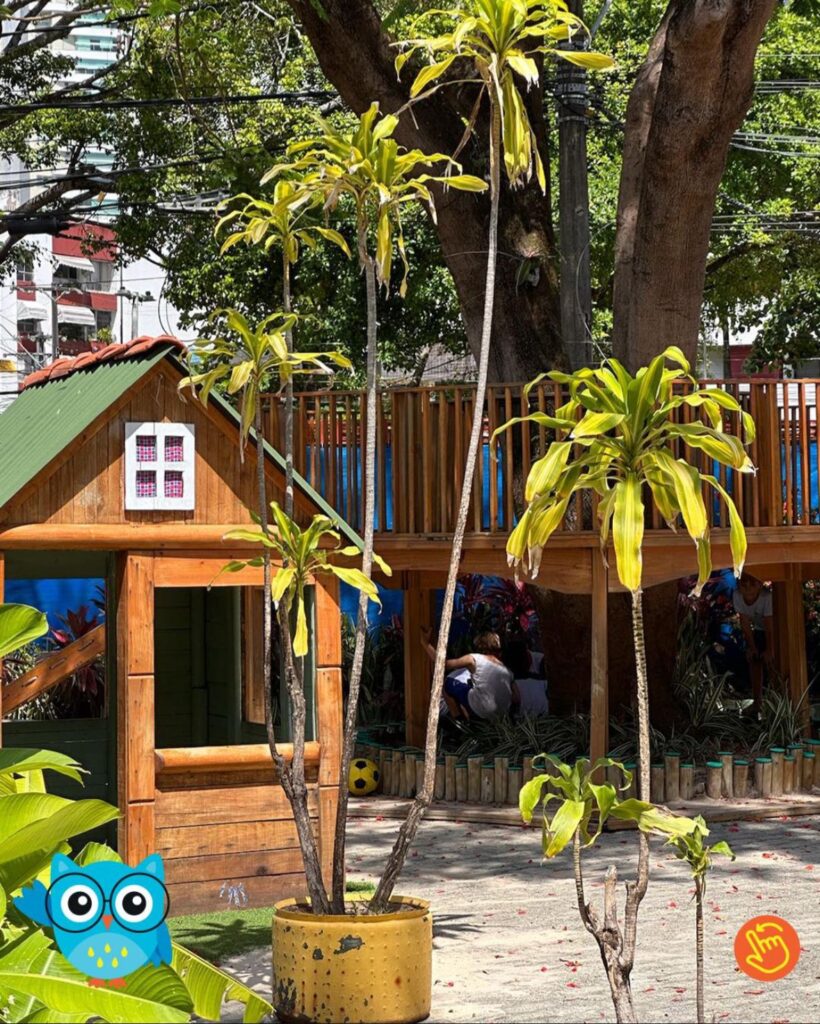
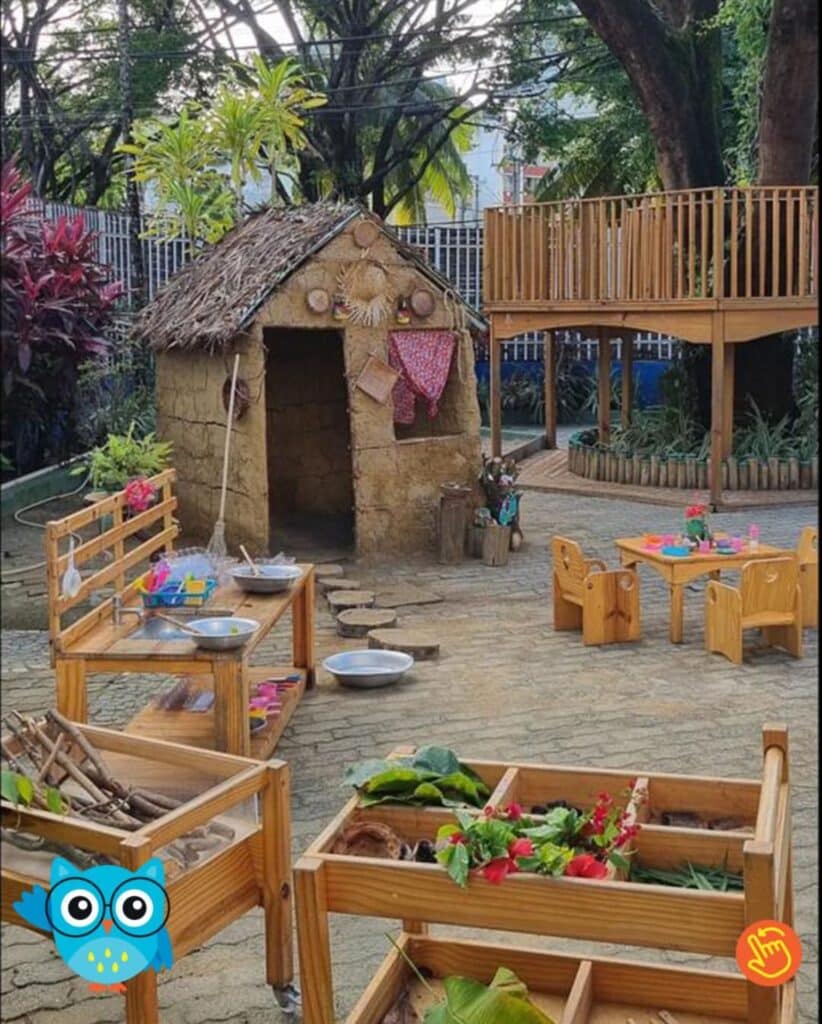
The curricular intervention project, entitled “What does nature teach?”, was implemented across all Early Childhood Education classes (ages 0 to 5) throughout 2024. Its relevance was anchored in the Freirean concept of the “viable unheard-of”: the concrete possibility of transformation through conscious action. Rather than serving as a mere backdrop, nature became the foundational axis of the curriculum.
Curricular interweaving was the key, uniting the experience fields of the National Common Curricular Base (BNCC), learning and development rights, and, crucially, the principles of the Earth Charter, with each class’s line of inquiry — always grounded in the children’s own interests and curiosities.
Final Considerations and the Legacy of the Earth Charter
The implementation of the Earth Charter at Cresça e Apareça School, although challenging — especially regarding the adaptation of traditional models by teachers and the systematization of documentation — revealed the resilience and capacity for overcoming challenges within a committed school community. The creation of an environment of cooperation and trust was essential to success (Morgenroth, 2025, p. 81).
For the continuity and replication of this model, the thesis suggests the institutionalization of practices through the revision of the Political-Pedagogical Project (PPP), with explicit focus on the principles of the Earth Charter, and continued investment in educator training. “The sustainability of this project lies in the school’s ability to protect and strengthen this approach, making it an inseparable part of its educational identity” (Morgenroth, 2025, p. 83).
The experience of Cresça e Apareça School is a living testament that the Earth Charter is not merely a declaration, but a practical and powerful tool capable of transforming curricula, schools, and, above all, the way children relate to the world. By adopting the Earth Charter as our compass, we are teaching about the planet and forming citizens who truly perceive themselves as an integral part of a community of life, engaged in building a sustainable future.
As an admirer of Paulo Freire, I reaffirm my belief in the “viable unheard-of” of transformative education. There is no “Planet B”; our commitment is to care for the planet we have, to keep it alive and healthy. And along this path, education guided by the Earth Charter is undoubtedly the most promising route.

Mariana Moraes Martins Morgenroth holds a Master’s degree in Educational Administration and Regulation of Education (University Center of Lisbon) and is Director of Cresça e Apareça School, Salvador, Bahia.