

By Claire Mortensen
As the Arctic continues to experience accelerated warming and unprecedented ice loss, the need for sustained scientific observation and data-driven understanding has become increasingly urgent. Accurately assessing the Arctic’s ecological condition is critical for informing conservation strategies, climate adaptation efforts, and evidence-based policy responses. Yet persistent financial, logistical, and harsh weather conditions significantly hinder data collection, resulting in vast portions of the Arctic, and other remote ocean regions, being characterized as data deserts, where limited information exists to support meaningful scientific, environmental, or social outcomes.
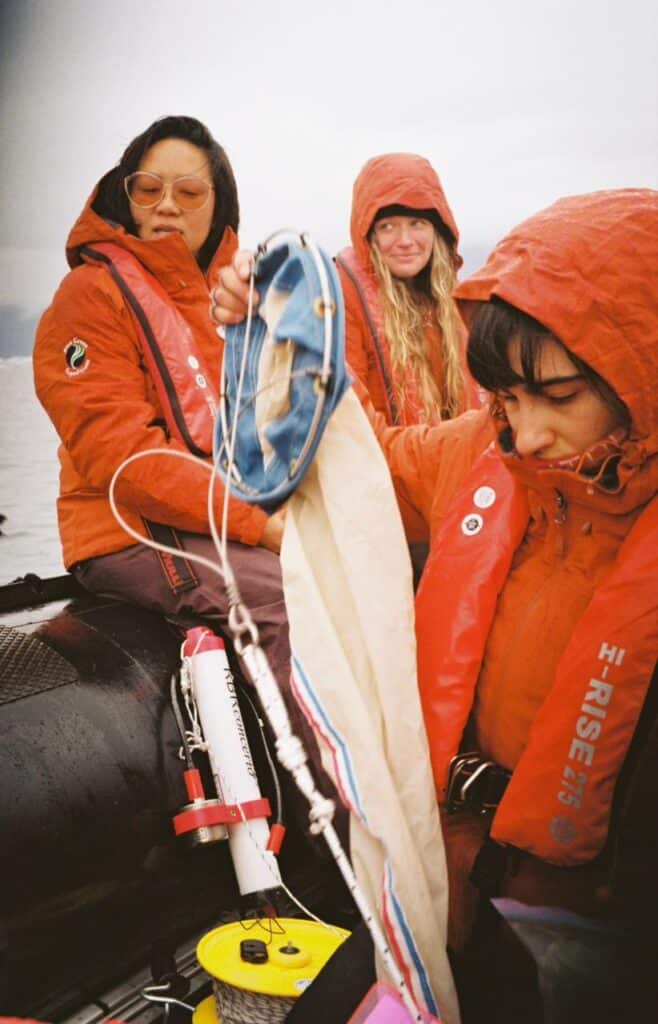
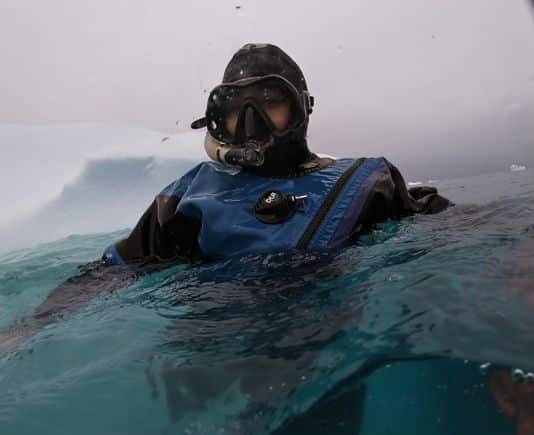
This summer, I had the rare opportunity to contribute to addressing these data gaps. Through my involvement with Seabirds, in partnership with NOAA, on Project Blue Echo, I supported the acquisition of vital environmental data within the Arctic Circle, contributing to broader efforts to improve scientific understanding and long-term stewardship of this rapidly changing region.
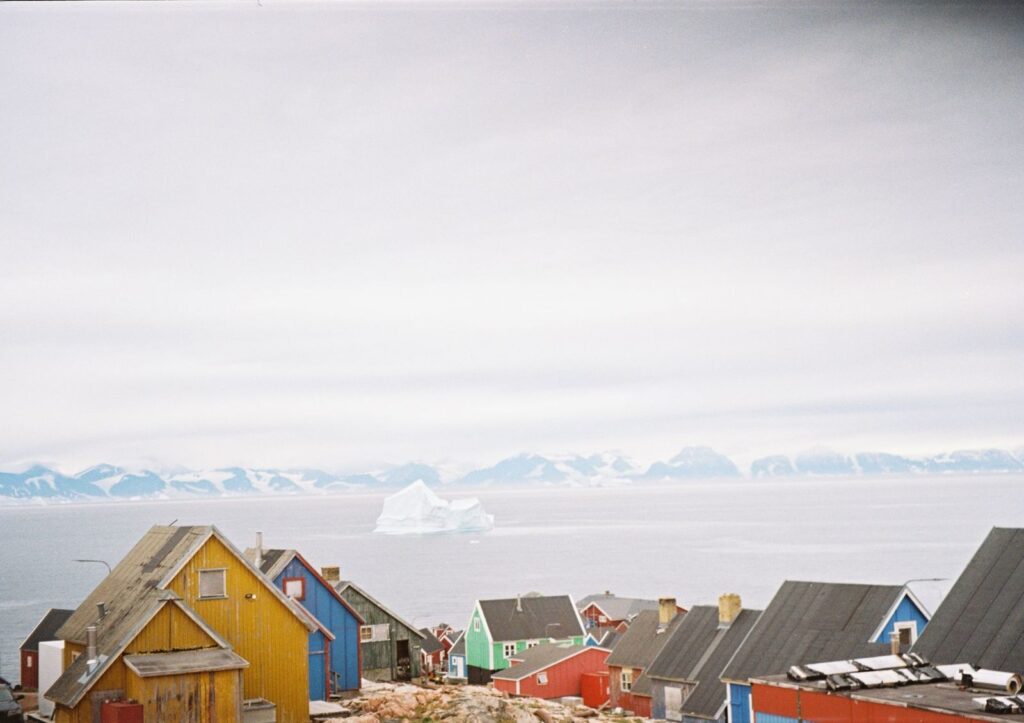
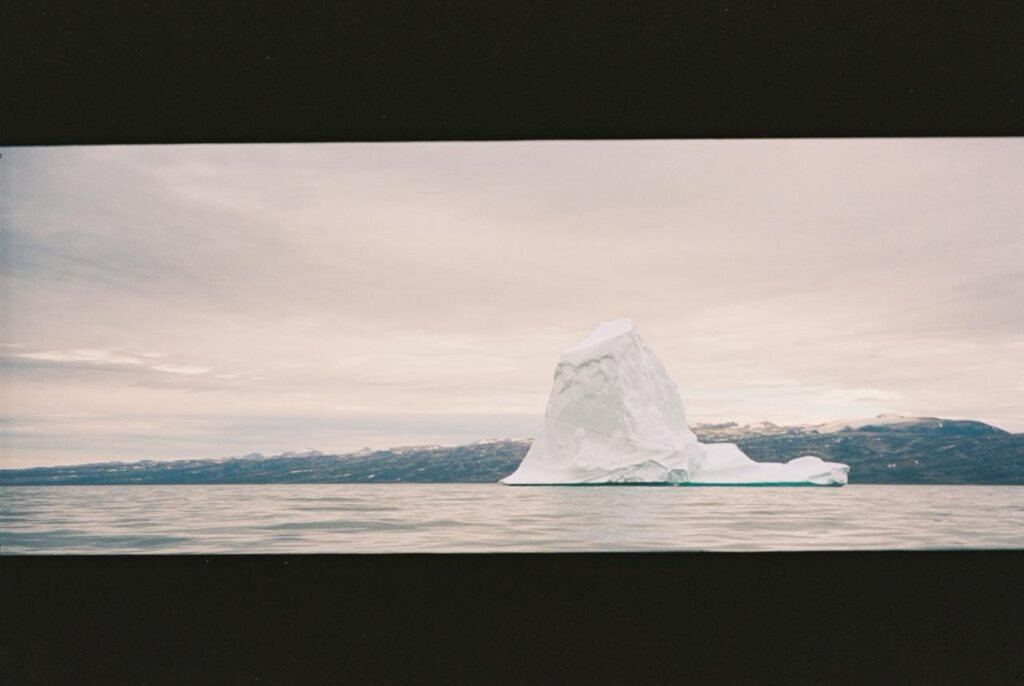
Project Blue Echo is an ambitious ocean research mission led by The Seabirds Foundation, a 501(c)(3) nonprofit dedicated to inclusive, ethical, and community-based marine science. Our team had the ability to access data-scarce marine regions in Northeast Greenland and Svalbard, Norway, to collect vital ocean health data, all of which is to be published on NOAA’s open database. The primary focus of the project was to collect acoustic data and gather key ocean health indicators such as pH, salinity, temperature, turbidity, depth, and GPS coordinates. Acoustic data can be utilized by researchers to observe marine life behavior, identify the presence of marine species, detect anthropogenic noise pollution, and support other related applications. This information facilitates the evaluation of the overall condition of marine ecosystems and the effects of climate change and anthropogenic activities. General water quality presents the chemical and physical condition of aquatic ecosystems. Although straightforward, these indicators establish a robust foundation for assessing ocean health. The objective was to collect essential data that must be monitored, evaluated, and disseminated globally to offer a more precise and pressing comprehension of the effects of climate change. The significance of polar ecosystems in alleviating these impacts is crucial to our collective endeavors to safeguard both the Earth and humanity. Our partnership with NOAA further facilitates the dissemination of this data to a global audience, serving as a valuable reference for future and longitudinal studies of the Arctic Ocean.
Though climate data and research are often associated with rigidity and exclusivity, it shouldn’t have to be that way. It is a disservice to humanity to keep climate science and the powerful knowledge it holds within such an enclosed sphere. The non-profit, The Seabirds Foundation, primary mission is to make science ethical in its practice, inclusive, and accessible to all audiences and communities. It is essential that this information be made more accessible to include those most affected by climate change and those facing barriers to science education. When science is made universal, it allows future generations to be stewards of the Earth. To “ensure that information of vital importance to human health and environmental protection, including genetic information, remains available in the public domain.” Our research, published by NOAA, will be available on their open database, which is in the public domain and has open access for all.
Science and research align with the principles of the Earth Charter, particularly Pillar II, Ecological Integrity. Having this information is the driving force behind reinforcing ecological integrity. It fosters understanding of how the environment is being degraded and allows for a deeper understanding of how climate change is affecting it.
When that information is clear, it can be used to educate others on the effects of climate change, construct a more climate-conscious future, and support the creation and implementation of environmental policy and respect for the Rights of Nature. It is integral to protecting and restoring the integrity of Earth’s ecological systems, establishing and safeguarding viable nature and biosphere reserves, and managing the use of renewable resources such as water, soil, forest products, and marine life in ways that do not exceed rates of regeneration and that protect the health of ecosystems (II.5.A.B.C). When this information is communicated and acted upon, it allows us to adopt patterns of production, consumption, and reproduction that safeguard Earth’s regenerative capacities, human rights, and community well-being (Earth Charter II.7). Additionally, I was fortunate to work with a team that was very conscious of “accepting that with the right to own, manage, and use natural resources comes the duty to prevent environmental harm and to protect the rights of people” (Earth Charter I.2.A).
In II.6 of the Earth Charter, “prevent harm as the best method of environmental protection and, when knowledge is limited, apply a precautionary approach.” It should also be noted that even though climate research is integral to understanding how to combat climate change, it is equally important to ensure best practices are taken to prevent environmental harm. When this reality is confronted rather than ignored or justified by the necessity of research, it demands a more accountable approach to scientific practice, especially in such a fragile and vital ecosystem as the Arctic. Centering the potential environmental impacts of fieldwork compels us to innovate, challenge extractive norms, and make deliberate, sustainability-driven choices that reduce harm while advancing essential climate research.
Being a part of this endeavor was about gathering critical data that must be observed, analyzed, and shared with the world to provide a clearer and more urgent understanding of the impacts of climate change. The role of polar ecosystems in mitigating these effects is vital to our collective efforts to preserve both the planet and humanity.
Moreover, with Greenland now at the center of international political contention, it is more important than ever to gather and disseminate this data. Should the conversation surrounding Greenland’s occupation evolve into more than dialogue, its future would face uncertainty, accelerating the degradation of Arctic ecosystems, worsening the global impacts of climate change, and further affecting the autonomy and safety of Greenland’s people.
My hope is that the more critical climate data is collected, the more this research will be used to galvanize people to engage in efforts to promote a more sustainable future, improved climate conditions, and meaningful change in climate policy.
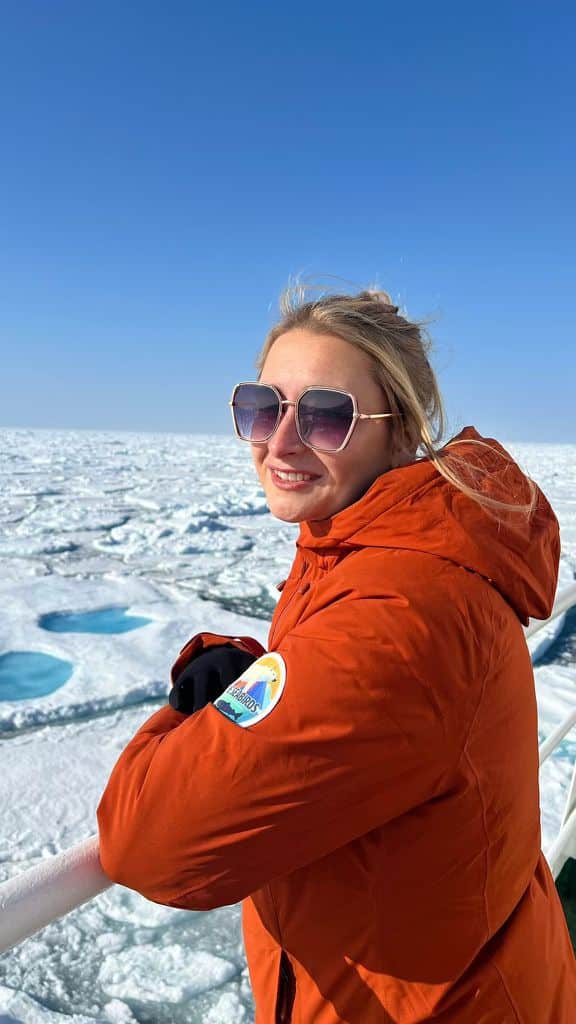
Claire Mortensen is an Earth Charter Youth Leader and University for Peace Alumni ‘22. Claire is an interdisciplinary climate and ocean advocacy professional with a strong foundation in international law and human rights. Claire’s background bridges field based marine research, including Arctic acoustic monitoring and marine conservation, with international environmental policy. She has contributed to marine protected area advocacy through the Turtle Island Restoration Network and their work in establishing a binational marine protected area between the Cocos Islands in Costa Rica and the Galápagos Islands in Ecuador, Antarctic environmental policy research, and UN policy processes, translating science into actionable policy recommendations. Her career centers on the intersection of climate change, marine sciences, international policy, and human rights, with an emphasis on equity, sustainability, and global environmental justice.