

A collaboration between CANLA, Earth Charter International, World’s Youth for Climate Justice, the Fossil Fuel Non-Proliferation Treaty, and GGON LAC

Date: Tuesday, April 14
Time: 10:00 AM (Central America) /11:00 AM (PE, EC, COL) / 1:00 PM (BR) / 4:00 PM GMT (1.5 hours)
Format: Zoom/YouTube Live
Registration: register via Zoom
This webinar will offer simultaneous interpretation in English.
Introduction
2025 has marked a turning point in the international architecture of climate and human rights. With the publication of the Advisory Opinions of the International Court of Justice (ICJ) and the Inter-American Court of Human Rights (IACHR)—both actively promoted by World’s Youth for Climate Justice (WYCJ)—the world now has, for the first time, a clear and binding interpretation of States’ obligations in the face of the climate crisis. This includes the need to phase out fossil fuels, protect the human rights of present and future generations, and act in accordance with the principles of non-regression, precaution, and intergenerational justice.
In this historical context, and leading up to the Conference on Transitioning from Fossil Fuels to be held in Santa Marta, Colombia, from April 24–29, this webinar proposes a dialogue that articulates three pillars:
- The global movement against the expansion of fossil fuel dependence proposes a mechanism to halt this dependence and enable just transitions.
- World’s Youth for Climate Justice as a key actor that transformed international law in 2025, consolidating intergenerational justice as an operational principle for climate action.
- The Earth Charter as a universal ethical framework to guide decisions toward a just transition.
The meeting seeks to link ethics, law, and climate policy, demonstrating how the Earth Charter and Advisory Opinions create a common ground to strengthen the global call for fossil fuel non-proliferation and accelerate a just and intergenerational transition.
General Objective
To explore how the movement for a Fossil Fuel Non-Proliferation Treaty, the Advisory Opinions of the ICJ and the IACHR, and the Earth Charter can be articulated to promote ethical, legal, and political commitments leading up to the Conference to be held in Santa Marta, Colombia (April 2026). Specific Objectives
- Identify points of convergence between the Earth Charter, Advisory Opinions, and the proposed Fossil Fuel Non-Proliferation Treaty.
- Strengthen the regional narrative and the role of these initiatives in building a global framework for climate justice.
- Offer strategic recommendations for advocacy leading up to the 2026 Treaty Conference.
Questions
- Is it possible to phase out dependence on fossil fuels, and why is it urgent to do so?
- How do the decisions of the ICJ and the IACHR legally obligate States to abandon fossil fuels?
- What conditions and actions are necessary to move toward a real, just, and ethical energy transition? How can the Earth Charter and its principles be used as a compass for a just transition?
- What is expected to happen at the conference in Colombia regarding the phase-out of fossil fuels? And what should be prioritized to move towards a just and legally robust transition?
Speakers

Laura Restrepo Alameda (Colombia) is an educator and a member of the Earth Charter International Council. She currently serves as Advocacy Officer at the Climate Action Network Latin America (CANLA), where she drives bi-regional processes on just transition, climate justice, and cooperation between Europe and Latin America, accompanying multilateral spaces. She is co-founder and national co-facilitator of the Colombian Platform for Children and Youth, an organization that advises LCOY Colombia and promotes the participation of girls, adolescents, and young people in climate action. She is also part of the regional front of World’s Youth for Climate Justice, where she advocates for the recognition of climate change as a human rights issue.

Sergio Díaz (Colombia), Legal Strategy Director at Fossil Fuel Treat, is an international lawyer with over a decade of experience specializing in environmental and treaty law. Before joining the Fossil Fuel Treaty initiative, he served as Head of the Treaty Section at the Ministry of Foreign Affairs of Colombia, where he played a key role in shaping Colombia’s positions on international legal issues, including the Advisory Opinions on Climate Change before both the Inter-American Court of Human Rights and the International Court of Justice, as well as those concerning the occupied Palestinian territories. In addition to his work in government, he is also a university professor.

Daan Zieren (The Netherlands), chairperson, Young Climate Movement, The Netherlands. The Dutch Youth Climate Movement (Jonge Klimaatbeweging) represents the youth voice in climate policy debates, both in Dutch politics and internationally. The organization consists of about a 100 volunteers and connects over 70 youth organizations in The Netherlands.

Aditi Shetye is an international environmental lawyer and leads strategic litigation at World’s Youth for Climate Justice (WYCJ), advancing legal action on climate injustices through a human rights lens and a decolonial approach centered on the Global South. She has advised climate-vulnerable states in international legal processes and coordinated advocacy networks.
She is also a researcher in public international and environmental law at the British Institute of International and Comparative Law (BIICL). She began her career in Mumbai and holds postgraduate degrees in global environmental law and policy.
Moderator
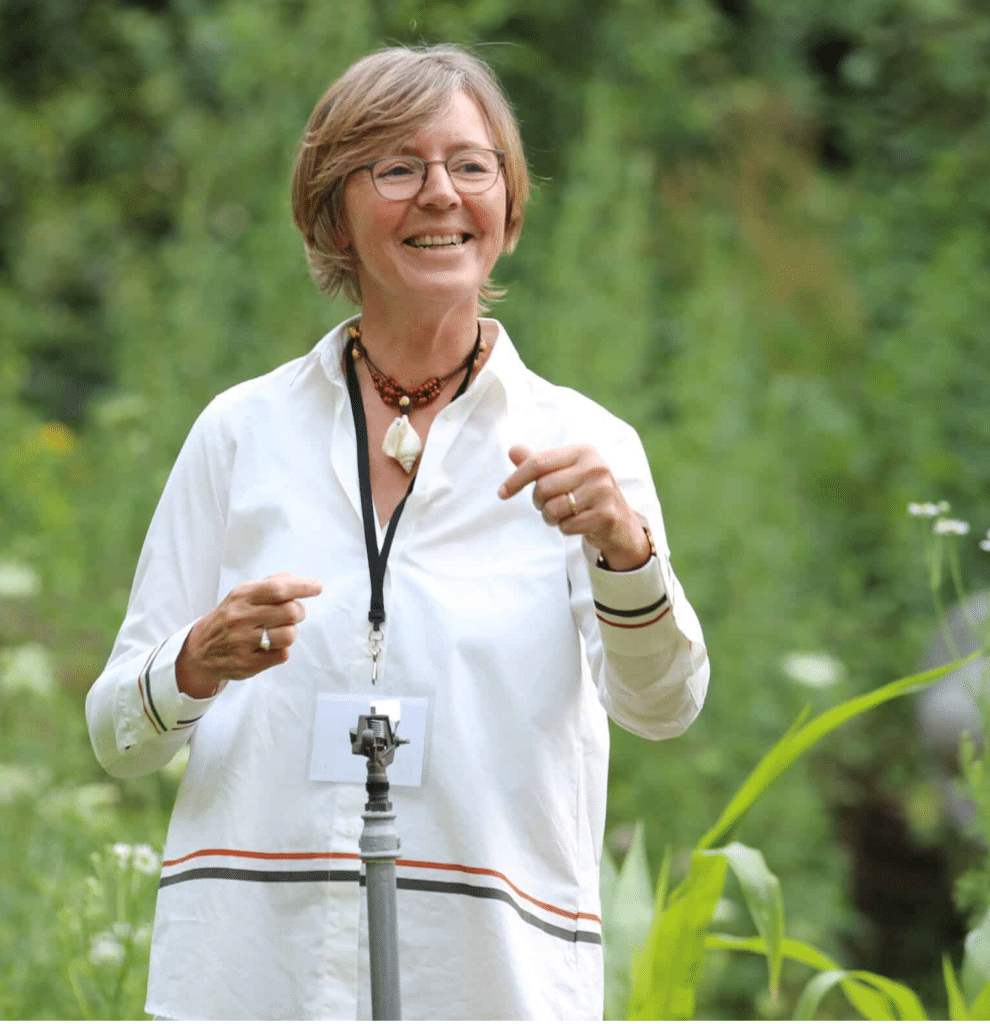
Alide Roerink (The Netherlands) is an anthropologist with extensive experience in networking, advocacy, and policy development for gender justice, international solidarity, and global governance. She served as coordinator of Vrouwenberaad Ontwikkelingssamenwerking, a network of gender experts in Dutch development agencies, and worked at the National Committee for International Cooperation and Sustainable Development (NCDO) from 2000 to 2013.Earth Charter International Council Member.